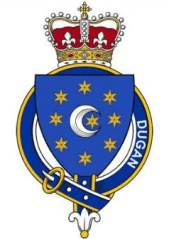
Duggan looks like a name that should be easy to explain. It’s short, familiar, and spelled the way it sounds—at least at first. There’s no silent letter or accent mark to trip over, and in English-speaking contexts, it rarely draws attention. But like many Irish surnames that have traveled far from their roots, Duggan carries more than what its surface suggests. Its meaning unfolds slowly, shaped by centuries of language, migration, and adaptation.
Names like this often follow people across generations without much explanation. Someone might grow up with the name Duggan and never think to ask where it came from or why it’s spelled the way it is. It just becomes part of the background of a person’s identity, something they’ve always had but haven’t needed to define. And yet, when you start to ask what Duggan “means,” the answer opens into something much broader than a single definition.
Part of the reason it’s hard to pin down is that the question of meaning isn’t just about translation. It’s about how a name has changed to fit different settings, how it’s been adapted for new languages, and how people relate to it today. Duggan means something in Irish, certainly, but it also means something in how it’s used now, in places and families that may no longer speak the language it came from.
The Gaelic Roots of Duggan
The name Duggan comes from the Irish Ó Dubhagáin, which translates roughly to “descendant of Dubhagán.” That personal name, Dubhagán, is built from the word dubh, meaning “dark” or “black,” and a diminutive suffix. So the full meaning might be something like “little dark one” or “son of the dark one.” These sorts of names were often descriptive. They could refer to a person’s physical features, like dark hair or complexion, or possibly even a figurative quality, like a serious temperament or a mysterious presence.
In early Ireland, surnames like Ó Dubhagáin served a specific purpose. The “Ó” indicated a person’s ancestry—literally, that they were a descendant of someone with that given name. It was a way of tying people to a family line, and by extension, to a place or a social role. For centuries, this kind of naming helped structure communities. It told others not just who you were, but who you came from.
What Was Lost in Translation
As Irish families began to interact more with English-speaking systems, especially during periods of colonization and migration, names like this were often changed. Sometimes the transformation was gradual. Other times it was sudden, imposed by record keepers, landlords, or immigration officers. In the case of Duggan, the “Ó” was usually dropped, and the spelling was simplified to fit English phonetics. This made the name easier to write, say, and record. It also pushed it further from its original sound and meaning.
The anglicized version, Duggan, is now the most widely used form. You’ll find it throughout Ireland, as well as in the United States, Canada, Australia, and parts of the UK. It’s especially common in counties Cork, Galway, and Clare, where families carrying the name have lived for generations. Over time, regional accents and assumptions about pronunciation introduced new versions. In Ireland, Duggan is typically pronounced DUG-un, with a short “u,” like in “mug.” Elsewhere, particularly in North America, it’s not unusual to hear DOO-gan or DOOG-in, which reflects a different reading of the same letters.
Variations in Spelling and Sound
There are also spelling variations. Some families use “Dugan,” dropping the second “g” entirely. Others have seen their names recorded differently in old census or church records, depending on who was doing the writing. These small changes might seem incidental, but they can affect how people relate to their family history. A missing letter can mean a different branch of the tree, or at least a different path through the paperwork of identity.
Tracing a name like Duggan back to its source doesn’t always tell you how it’s felt or lived. For one person, the name might be a link to Irish heritage, a reminder of grandparents or distant cousins. For another, it might be something they’ve never thought much about. Both experiences are common, and neither tells the whole story on its own.
What a Name Carries Over Time
There’s also the question of what gets left behind. The original Gaelic version of the name carried information that the English version often doesn’t. It told people who your ancestor was, where they came from, and what they might have looked like or been known for. As names were shortened and simplified, much of that context disappeared. What remained was the shell of the name—still recognizable, but quieter in what it could reveal.
Even in their simplified forms, names like Duggan still hold value. They offer a trace, a way to move backward or sideways through history. When someone looks into where their name comes from, they’re not just learning a fact about pronunciation or translation. They’re learning how people before them lived, what they were called, and how they were remembered.
A Meaning That Isn’t Fixed
So what does Duggan really mean? Linguistically, it means “descendant of the little dark one.” Historically, it marks a family line in Ireland that endured through language shifts and social change. Practically, it’s a surname that’s traveled widely and adapted along the way. And personally, its meaning depends on how someone carries it—what they know about it, what they’ve been told, and what they choose to find out.
The answer isn’t simple because it isn’t singular. Names like Duggan sit at the intersection of language and memory. A name can mean something different at different points in a person’s life. It can be something you inherit, something you reclaim, or something you barely think about until a question makes you look more closely.
That closer look doesn’t have to lead to a perfect definition. It’s enough that it leads somewhere.